Romanian dragon reservation
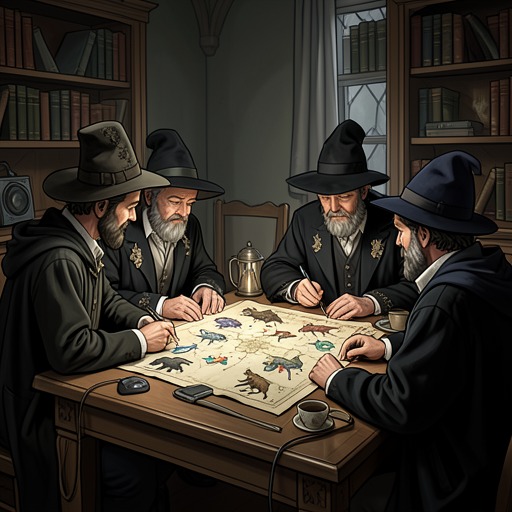
Fantastic Beasts and Where to Find ThemThe Romanian dragon reservation is described as the world’s most important dragon reservation and a place where wizards of many nationalities study several dragon varieties at close range. Its importance is inseparable from a conservation problem: the reservation’s native Romanian Longhorn population has declined, largely because of demand for its horns, prompting an intensive breeding programme. The site thus joins scientific access and species protection, while showing how the commerce surrounding a magical creature can threaten the population that makes such study possible.
Setting and purpose
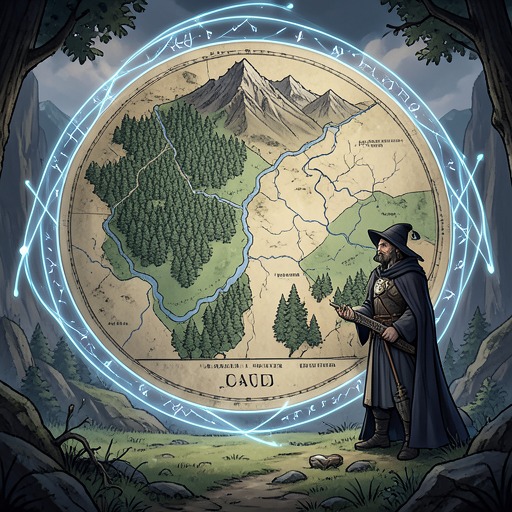
The reservation occupies the native territory of the Romanian Longhorn. The account identifies it not merely as a refuge for one dragon variety, but as the world’s most important reservation for dragons generally. Wizards of all nationalities come there to study a variety of dragons at close range, making the protected territory an international centre for direct observation of these creatures.
That combination of refuge and study site gives the reservation a dual role. Its stated value lies in protecting a native dragon population and enabling close study of dragons; the evidence does not describe a specific visitor facility, governing body, or research method. What it does establish is that conservation and human access meet in the same place: the animals remain in their native territory, while wizards travel there to observe them.
The Romanian Longhorn and commercial pressure
The Romanian Longhorn’s decline is linked largely to the trade in its horns. The horns are used to gore prey before roasting it, and, once powdered, are highly valued as potion ingredients. Their value as a material therefore gives the living dragon a commercial significance that extends beyond its place in the reservation: demand for a sought-after ingredient has contributed to the reduction of the species’ numbers.
The horns are defined as a Class B Tradeable Material. That classification identifies them as a regulated trade item, but it does not erase the conservation tension recorded in the account. The same product that gives the horns market value is associated with a decline serious enough to prompt intensive breeding. The reservation’s conservation purpose consequently appears against a wider pressure that cannot be understood solely as a matter of habitat: trade in a valuable part of the animal is also implicated.
Breeding and conservation
Because the Romanian Longhorn’s numbers have fallen so low in recent years, it has become the subject of an intensive breeding programme. The account gives both the intervention and the reason for it, linking the low population principally to horn trading. Breeding is presented as an effort directed at the species’ dwindling numbers, rather than as a response to a stated change in its habitat or natural behaviour.
The evidence does not specify the programme’s methods, the size of the population, or whether its numbers later recover. Its significance is nonetheless clear: the Longhorn’s presence in its native reservation does not by itself protect it from commercial pressure. Conservation requires active management, while the reservation’s role as a place for close study sits beside, rather than resolving, the risks attached to the dragon’s marketable horns.
Place in magical-creature governance
The reservation belongs to a larger framework of magical-creature management. Under Clause 73 of the International Code of Wizarding Secrecy, inserted in 1750, each wizarding governing body is responsible for concealing, caring for, and controlling magical beasts, beings, and spirits within its jurisdiction. The reservation’s protective and study functions fit within this broader expectation of care and control, although the account does not specify the reservation’s administrative chain or the particular legal measures applied there.
That framework combines animal care with the maintenance of secrecy, and the book elsewhere describes magical-creature management as part of the work of the Department for the Regulation and Control of Magical Creatures. The reservation, by contrast, is presented through its distinctive local and international significance: it protects a dragon species in its native territory and draws wizards of different nationalities to study dragons at close range. Its importance rests on holding these aims together even as the Longhorn’s decline exposes the limits of protection in the face of trade.